
“Early on we realised that if we wanted to truly transform peoples’ lives through their living environments, we needed to develop more deeply our fascination with, and knowledge of, the ‘science of silence’ – and then apply that expertise to our products and our process.”
Jacob Gwalbert Figura, CEO
What is noise pollution?
There is no single noise pollution definition because there are so many things that can create sufficient noise to disturb anyone’s sleep.
One area we can all agree on, however, are the effects of noise pollution. In our business, we meet so many people whose quality of life has been significantly worsened by their inability to get enough sleep.
There are a wide variety of sources of sounds that keep you awake at night.
These include:
- Traffic noise from nearby cars and trains;
- Aircraft noise if you live under a flight path close to an airport;
- Noise from neighbours talking, shouting or playing loud TV programmes or music;
- Anti-social noise in the street made by people coming home late from an event, pubs or other nightspots.
At Hugo Carter, we can create, deliver and install bespoke, award-winning silent windows that will provide you with the perfect answer when you are wondering how to drown out noise from the street.
But let us look in more detail at the whole subject of sleep – its importance to people’s lives and how you need the benefits of getting more of it.


The Science of Sleep Deprivation
The human body needs sleep just as surely as it requires air, food and water to function properly.
If you are getting less than seven hours of sleep every night, because of trouble falling asleep or disturbance caused by noise pollution, the impact on your mental and physical health can be significant.
Lack of good sleep can seriously affect the way your brain and body work. Your quality of life and your body can be impacted in the following ways:
- Central Nervous System: While you sleep, links are built between nerve cells in your brain to help you remember new information. Without enough sleep, your exhausted brain cannot function as it should. You may find it difficult to concentrate, coordinate things and work effectively. You can also suffer mood swings and decreased creativity, as well as making poorer decisions. If you go without good sleep for long enough, you could be prone to anxiety, depression and paranoia.
- Immune System: When you are asleep, this produces protective substances such as antibodies to combat bacteria and viruses. Without enough sleep, you may be more vulnerable to these. In the long term, you could be susceptible to diabetes and heart disease.
- Respiratory System: Obstructive sleep apnea is a disorder that can interrupt your sleep. If you wake repeatedly and get less sleep, you could be more likely to suffer from colds and flu.
- Digestive System: Sleep affects the levels of two hormones that control feelings of hunger and fullness. Insufficient sleep reduces your levels of leptin, which tells your brain you have had enough to eat; it also raises ghrelin, which stimulates your appetite. Also, if you are too tired to exercise, you may be prone to gaining weight. In addition, sleep deprivation causes your body to release less insulin after you eat, a substance that helps you to reduce your blood sugar level.
- Cardiovascular System: Sleep keeps your heart and blood vessels healthy and helps your body to heal and repair itself. If you do not sleep enough, you may be at increased danger of cardiovascular disease, while insomnia has been linked to an extra risk of heart attack or stroke.
- Endocrine System: The interruption of sleep can affect the production of hormones including those that help the body to build muscle and repair cells and tissues.
Sleep and Noise Pollution
The serious consequences of sleep deprivation make it even more essential that you take every measure possible to ensure an undisturbed night’s sleep.
As outlined above, there are several obvious sources of noise that can make a difference to the amount of sleep you are able to enjoy, such as traffic and anti-social noise.
But you might be surprised by the extent to which your sleep can be affected by even low levels of noise.
The World Health Organisation (WHO) has studied the effects of noise pollution on sleep. It has issued night noise guidelines that suggest the level of sound to which you are subjected during the night should not exceed 40 decibels.
That is the same amount of noise that you might reasonably expect to find in a quiet street in a residential area.
The WHO also suggests that long-term exposure to levels of noise averaging more than 55 decibels – equivalent to the noise from a busy street – can trigger elevated blood pressure and heart attacks.
Preventing noise pollution while you sleep is, therefore, essential. When you understand noise pollution and how it affects sleep – and understand the close relationship between sleep and noise pollution – it becomes highly advisable to take every step possible to maximise one by minimising the other.

Struggling to Sleep at Night?
There are techniques you can use to help yourself sleep more soundly even when there is a level of noise going on through the night.
Indeed, it has to be said that there are a certain number of people who find they can’t sleep in total silence.
For those who want to find out how to sleep through noise, or simply to block out noise to sleep, the following tips may be useful:
- Try to forget it is noisy: Yes, this may be easier said than done. But if you focus simply on the noise that is disturbing you, sleep will inevitably remain elusive. Accept the noise is there and tell yourself you can rise above it.
- Think about something else: Focus on deep breathing exercises, work down your body relaxing each muscle you come to, visualise yourself in a happy and quiet place – or you could even use meditation to train your mind to focus on a single quiet point.
- Distract yourself: Put on a pair of headphones and play some quiet classical music or some meditation tapes. If you do not feel like playing music, try a pair of earplugs.
- Tire yourself out: Make sure you get plenty of exercise and natural sunlight during the day. Both will help you to feel exhausted and ready for sleep to an extent that enables you to overcome any noisy distractions.
- Set up a new bedtime routine: This could involve a warm bath or shower, using essential oils, turning off all your devices and making sure you go to bed at the same time each night.
How to Block Out Noise When You Sleep
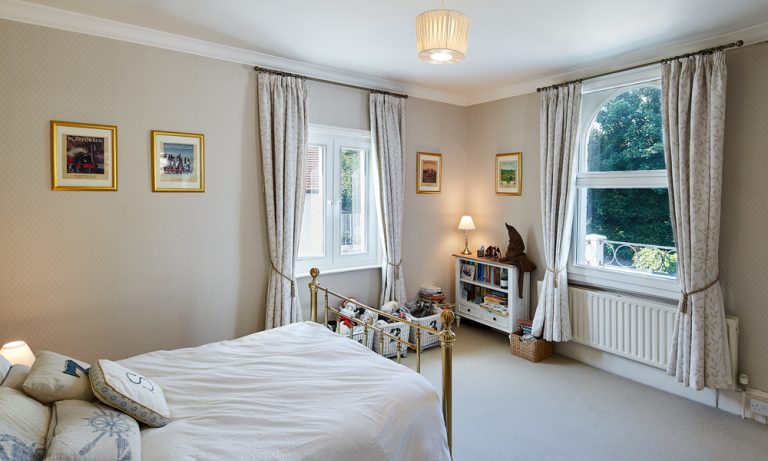
For most people, the best strategy to follow when you are trying to get more sleep is to reduce to an absolute minimum the amount of noise penetrating your bedroom.
However, the sound that is disturbing you is generated – by people, electronic devices or traffic – finding a way to lessen it is key to a better night’s sleep.
The best noise reduction technique for sleeping is the installation of soundproof windows in your bedroom.
Hugo Carter offers a broad range of windows that can be created in collaboration with you to ensure that the finished product suits your property perfectly.
Our team of expert installers can deliver a window or set of windows that represent the best way to block noise while you are sleeping. (Check out our Definitive Guide To Soundproofing Your Home for even more info on the best ways to eradicate noise from your property)
Whatever is causing your disturbance, we can show you how to sleep without earplugs. Because when you ask: “What can help me sleep all night?” our answer is that our award-winning silent windows offer an extraordinary level of noise reduction.
Check out our range of products and find the one that might work for you – and we will then discuss in detail how we can create an installation that is the answer to your anguished prayers.
Tips on how to Get to Sleep Easily
We measure noise levels with the latest acoustic analysers, such as NTI Audio XL 2, to determine the exact noise profile.
Ensure that sleepless nights become a thing of the past.
We use engineered timber – the ultimate noise suppressor.
Achieve a new level of tranquility throughout your home.
Our noise reduction glass is from the world’s leading providers
– Pilkington and Saint Gobain.
Let in light, but not noise, with soundproof bi-fold doors.
Tips on how to Get to Sleep Easily
Ultimately, when you are suffering from sleep deprivation, you are looking simply for solutions that will tell you how to sleep easily and how to get sound sleep through the night.
As we have mentioned in the previous section, installing windows created by an expert company such as Hugo Carter will represent a significant step when you want to see how to block out noise when you sleep.
However, there are certain techniques that will help you to fall asleep more easily – and specifically, here is a set of suggestions that we believe will make going to sleep a more straightforward process:
- Set a routine: If you go to sleep and wake up at the same time each day, your body will become used to it. You will enjoy a healthier sleep pattern as you develop the familiarity of sleeping at the same hour every night.
- Dim the lights: Not just the bulbs in your bedroom, but the blue light that emanates from TVs, phones and other devices. Cutting back on the use of your electronics in the countdown to bedtime encourages your body to produce melatonin, the hormone that makes you sleepy.
- Get comfortable: Double-check your mattress, pillows and bedding and make sure they are as supportive and comfortable as they need to be. It is worth investing in a new mattress and even a new bed every so often – you may be surprised what a difference the right bed can make to your sleep and your life.
- Cut back on stimulants: Caffeine should be an absolute no-no from early evening onwards because it stimulates the mind and keeps you from sleeping. Nicotine has the same effect.
- Keep a diary: Writing down your reflections on the day just gone, and listing the tasks you want to complete tomorrow, can be an excellent way of relaxing your brain and encouraging you to sleep easily and soundly.
- Get up: if you are disturbed, get out of bed and do something relaxing until you feel tired again.

Making an Informed Decision About Your Home
This sounds almost too good to be true. But the technique used by the United States armed forces to help its fighting men and women fall asleep in less than two minutes has been used widely over the years – and it definitely works.
Military chiefs wanted to come up with a structured method that would help their troops get some rest in less than ideal conditions, such as during combat operations.
It has been reported that 96% of combat pilots perfected the technique after six weeks of practice.
So how does it work? There are four principal steps:
Get comfortable: Find the position in which you are most at ease and ready to sleep.
Relax your face: There are 43 muscles in your face, and when they are working they send a message to your brain that things are going on. When you relax them, they send the opposite message. Systematically work around your head relaxing your ears, forehead, cheeks, chin and tongue. You are telling your brain and body that it is time to sleep.
Release the tension: Now work your way down your body. Start with your shoulders, then your neck and arms. You will be surprised how much tension you are carrying – and how much more relaxed you feel as you take that tension away. Move down your torso, back and legs, right down to your feet.
Clear your mind for 10 seconds: Stop thinking about work or family matters and focus simply on one of the following:
- Imagine you are lying in the bottom of a canoe on a calm lake. You are looking up at a blue sky. Focus on that picture for 10 seconds.
- Imagine you are lying in a big, black, velvet hammock and everywhere you look is black too. Hold that picture for 10 seconds.
- Blank out all other thoughts and simply say in your mind “Don’t think… don’t think…” for 10 seconds.
Want to know more? Contact us today
We hope that this guide has given you some useful insight into the nature of sleep, the perils of sleep deprivation and the practical steps you can take to get to sleep more easily and to sleep more soundly when you do.
If you would like to discuss how Hugo Carter can share our excellence in the science of silence to help your sleep and improve your quality of life, please get in touch today.